COME JOIN US ON OUR NEXT TOUR:
For more information click below:

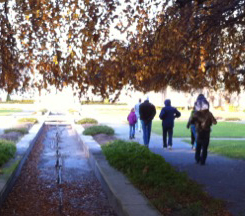
THE GARDENS
A tour of the features and terrain.
Samuel Untermyer commissioned Welles Bosworth to design the gardens in 1912. Bosworth had just completed the garden design for John D. Rockefeller, Sr. at Kykuit.
The so-called Greek gardens are actually Persian gardens (probably the finest in the country), clothed within classical garb. Persian gardens date back to 2000 BCE or so, with the oldest visible garden, that of Cyrus the Great, from around 500 BCE.
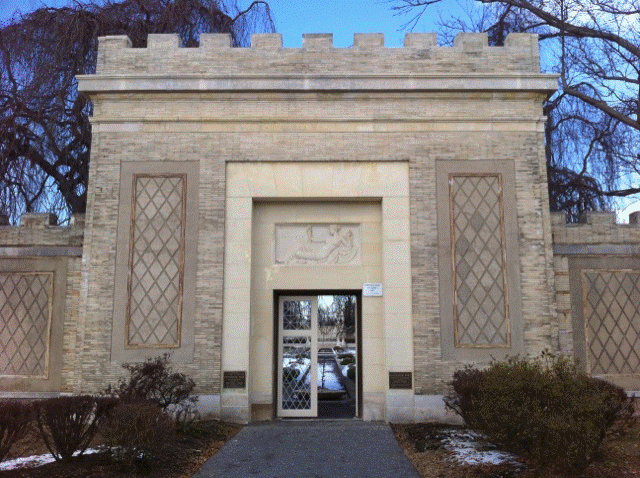
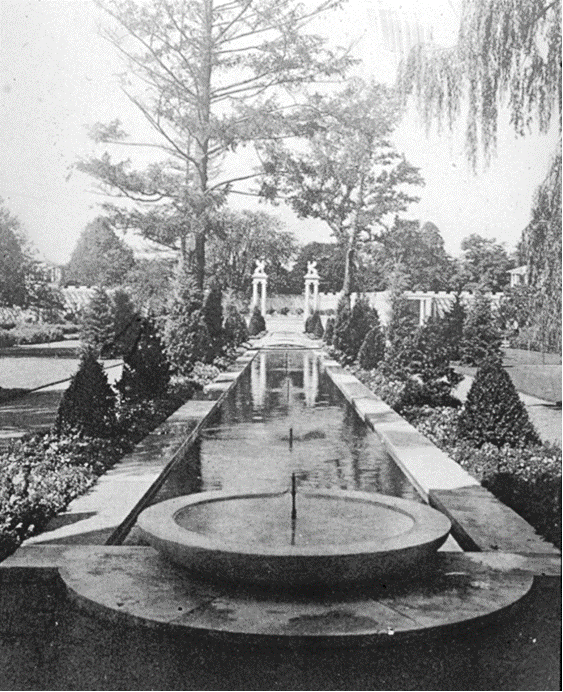
Persian gardens are characterized by a walled enclosure, symbolizing paradise, with a large monumental gateway. The battlements at the top of the wall are Persian in form. Inside the garden, two water channels intersect at a central basin. The four water segments symbolize the four rivers of paradise. The four rectangles of land formed by the channels symbolize the four elements (earth, water, air and fire) or the four directions (north, south, east, west). Corner towers, which originated as defensive elements for forts, served as summer houses or viewing platforms. The landscape was often ringed with shaded loggias. Low bubbling fountains, accented by rhythmic vertical planting, was another characteristic feature.
Persian gardens were originally contemporary with Zoroastrianism, but later became associated with Islam in the 7th century CE. As Islam spread, so did the Persian garden form, seen at the Alhambra in Spain and the Taj Mahal in India. Most Persian gardens have four walls, but the Taj Mahal, like Untermyer, has three walls, to afford a spectacular river view on the fourth side.
Entering the Gardens
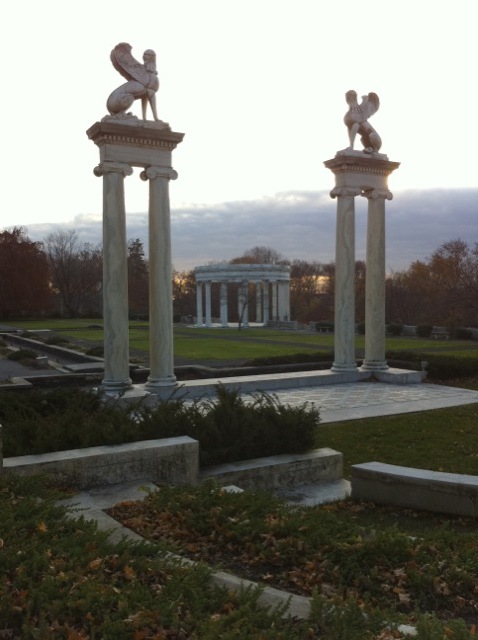
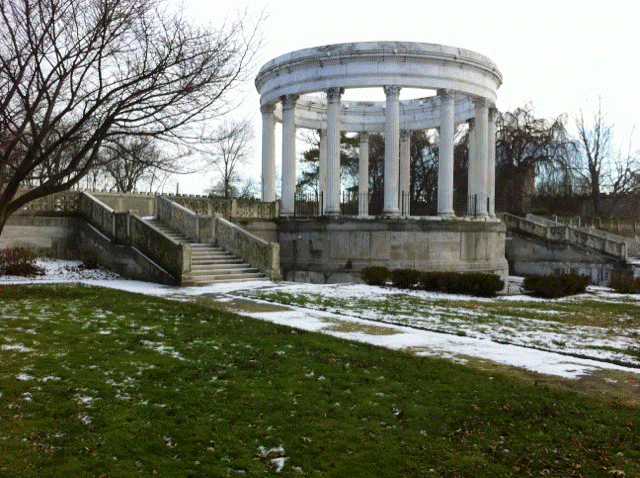
Within the walls, the main gate is faced with the forms of the most ancient Greek architecture, that of Mycenae. As one circles around the garden counter-clockwise, the columns progress from the oldest order (Doric) to Ionic to Corinthian, the youngest order, at the round temple. The Ionic columns bear the great sphinx sculptures by Paul Manship. Sphinxes were Mycenaean mythic creatures often deployed to guard something precious, which in this case is the amphitheater, representing culture, such as music, theater or poetry.
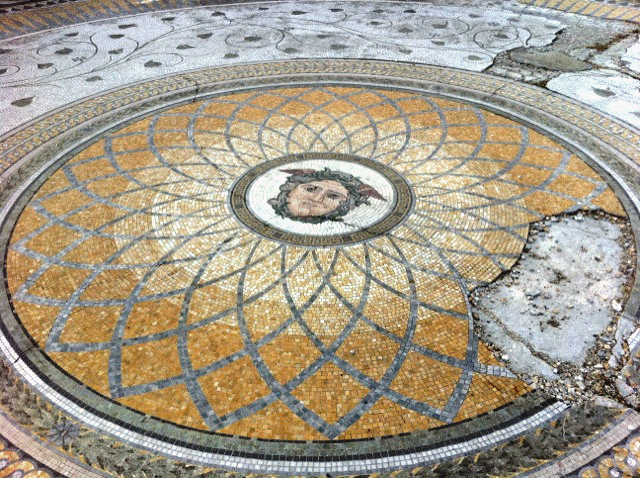
The circular temple has one of many magnificent mosaics in the garden. The figure of the Medusa symbolizes the union of two water elements (fountains and Hudson River), as the Medusa is the offspring of two marine gods. The large ruined swimming pool below is decorated with elaborate mosaics featuring many sea creatures.
The Vista
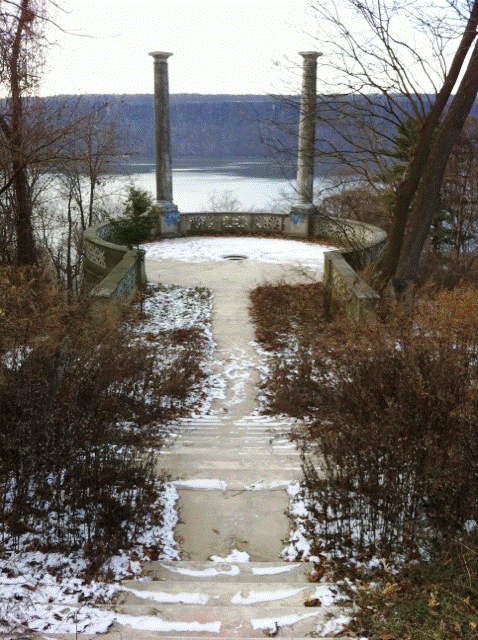
The loggia on the north on the lower level gives onto the most dramatic feature of the garden, the Vista, looking straight across the Hudson River to the Palisades. While overgrown, this was based upon the Villa D’Este on Lake Como, a great Italian Renaissance garden. The proportions are almost identical. While descending, there were originally six parallel descending Color Gardens on the right. Each garden featured only one color of flower. The hospital replaced four of the gardens, so only the bottom two color gardens remain, in total ruin. From the lowest curved garden, there is a magnificent view looking north to the Tappan Zee.
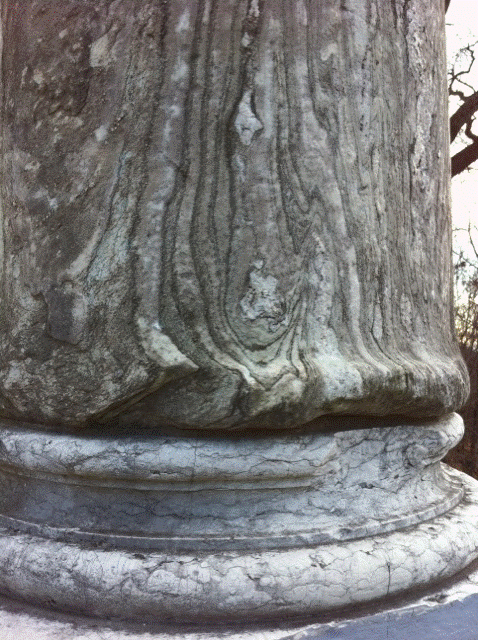
At the bottom of the stairs is a circular space, featuring two ancient monolithic cipollino Roman columns, over 2000 years old, imported to this country by Stanford White. To the north is a chain of gardens, only a few of which survive in total ruin, with a double row of columns surviving. A nursing home was built on part of these gardens, which were destroyed.
The Temple of Love
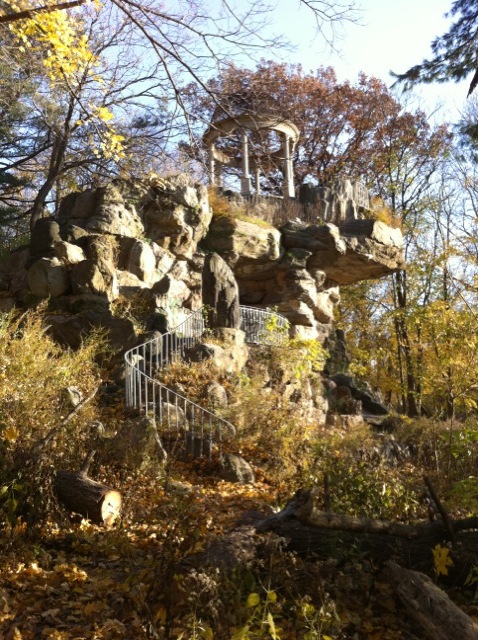
To the south at a distance is the Temple of Love, also known as the Eagle’s Nest. Best viewed from below, it is a stupendous rocky fantasy capped with a round temple. It was the centerpiece of an extended rock garden, now hidden in brush. The outcropping was an elaborate water feature, with water coursing all around it in various waterfalls and ponds.
Many of the rocks are hollowed out to form planters, and the entire creation was elaborately planted. There are tunnels and 2 bridges in the rough stone. From the summit is a magnificent view south down the Hudson River.
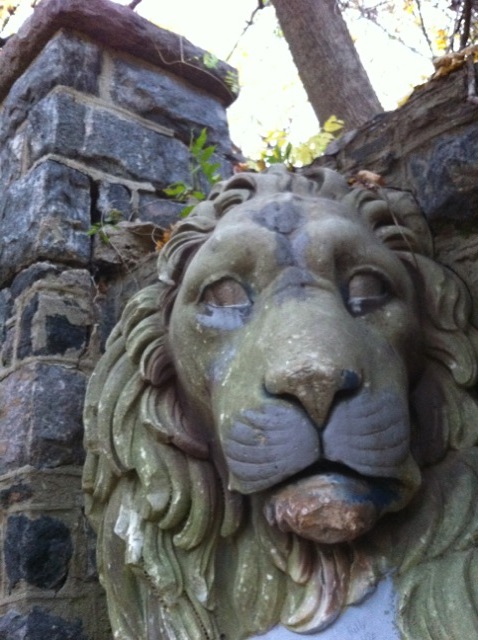
Other parts of the garden feature two large lion and horse sculptures, at the inner lower gates adjacent to the Croton Aqueduct. The lion and horse sculptures are attributed to Edward Clark Potter, sculptor of the lions in front of the New York Public Library on Fifth Avenue. These are accessible from the lower gates on Warburton Avenue. Immediately adjacent is a ruined gatehouse. There is also a long, deteriorated carriage trail, with dramatic rock outcroppings, flowing streams, waterfalls and crumbling walls. At a switchback turn is the ruins of a large circular fountain with granite steps.
There are more details to recount, but this gives an overview of Untermyer Gardens. It is a garden that is unique in America.
---------------------------------------------------------------------------------------------------------------------------
Further reading about The Gardens :
Further reading about Samuel Untermyer:
Click on an image to view larger size and captions.